
Precision is not negotiable.
In the Thai market, raw data is abundant but clarity is rare. Our methodology transforms fragmented signals into localized competitive intelligence through a three-layer validation framework.
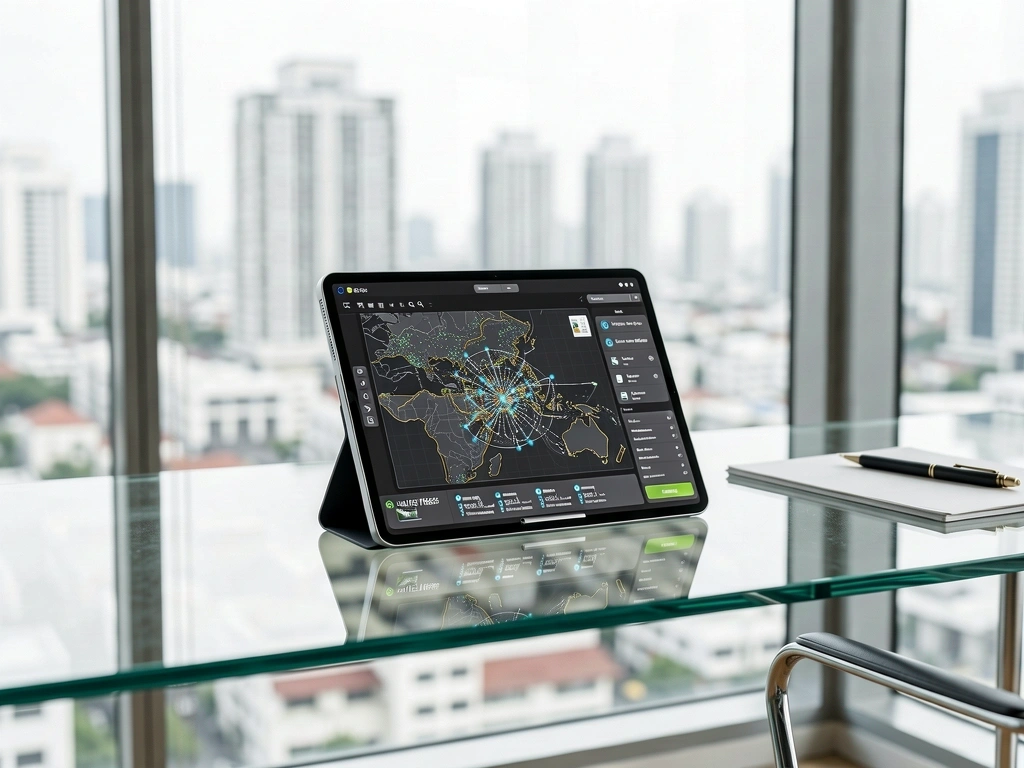
Primary Sourcing & Regional Harvesting
Reliable benchmarking begins at the source. We do not rely on third-party scrapers or static datasets. Our team extracts real-time performance metrics directly from public disclosures, regional commerce hubs, and proprietary digital footprint analysis across Thailand’s commercial sectors.
By capturing data at the point of origin, we eliminate the "lag effect" found in traditional annual reports. This ensures that the analytics we provide reflect the market as it exists today, not as it was six months ago.
- 1 Digital Infrastructure Audits: Evaluating server response and UX performance across 500+ Thai domains.
- 2
- 3
The Multi-Variant Verification Loop
Every data point processed by BengalBest must pass through three distinct validation gates before appearing in a client dashboard. This eliminates the risk of "dirty data" skewing your strategic decisions.
Why Geography Redefines Data
Global benchmarking models often fail in Southeast Asia because they ignore the unique digital ecosystem of Thailand. Our methodology accounts for high mobile-first penetration, "Line" ecosystem influence, and localized e-commerce behavior.

Measurement Standards
We audit five core pillars to provide a complete picture of market leadership.
Market Penetration Velocity
Tracking the rate of new user acquisition vs. churn within a 30-day window.
Operational Efficiency Ratio
Revenue per employee and output-to-resource benchmarks tailored by industry.
Digital Resiliency Index
Assessing technical uptime, security posture, and platform stability across peak periods.
Brand Sentiment Equity
Qualitative analysis of customer loyalty signals in the Thai social commerce space.
Cross-Platform Interoperability
How effectively a business manages its data flow between web, app, and point-of-sale.
"Snapshots are history. Streams are strategy."
We update our core benchmarking models Every Monday at 08:00 ICT. This ensuring your dashboard reflects the most recent shifts in Thai consumer behavior and competitor activity before the start of each business week.
Methodology FAQ
Clarifying the technical standards of our analytics processes.
How do you manage data privacy during benchmarking?
We use differential privacy algorithms to inject mathematical noise into person-level data, ensuring that identities are theoretically impossible to reconstruct while the aggregate trend remains 99.9% accurate.
Is the data specific to certain industries?
While our core engine is agnostic, we have specialized weighting models for Retail, Financial Services, E-commerce, and Logistics—the four pillars of the modern Thai digital economy.
Can we audit your source list?
Enterprise partners have access to a full documentation suite detailing every public endpoint and primary source utilized in their specific sectoral report.